The Journey of Learning That I Don't Have to Choose Between Them
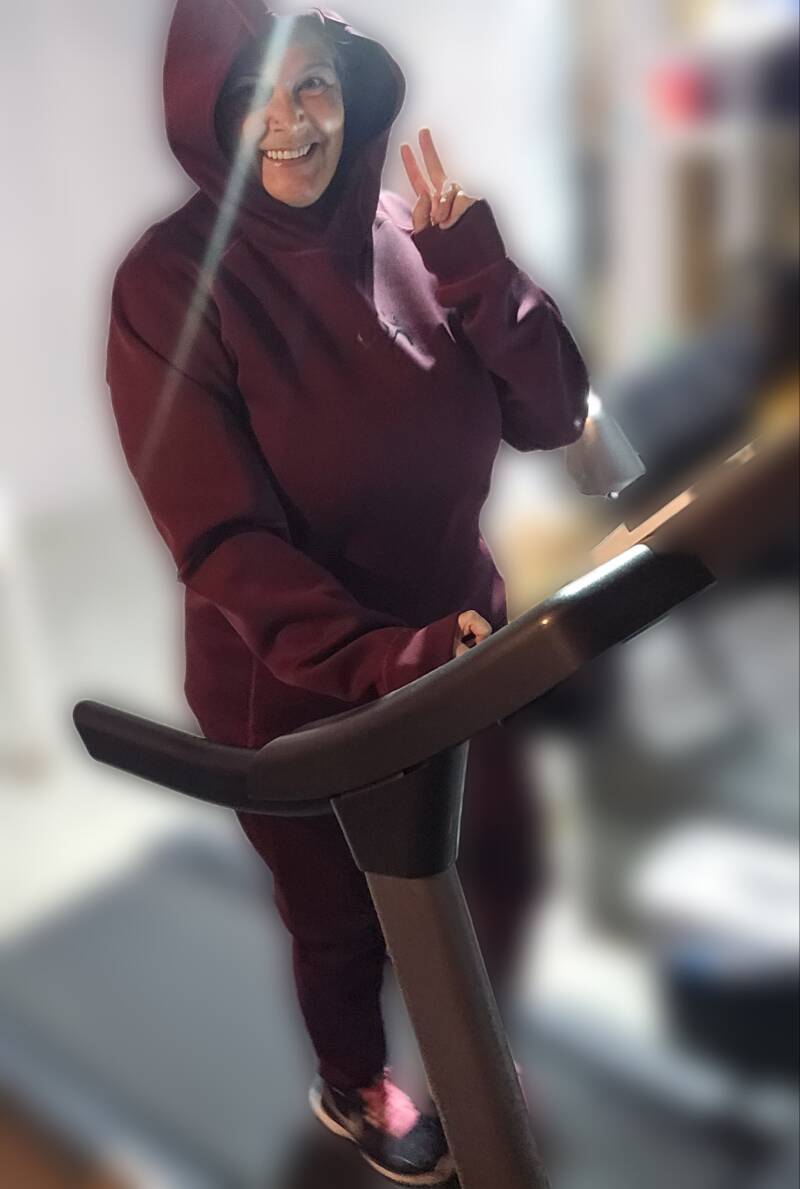
For years, I thought I was doing everything right.
I was eating less. Moving more. Making healthier choices than I did in my younger years. Yet the scale kept creeping up, my energy wasn't what it used to be, and my body seemed determined to ignore every effort I made.
Like many women in menopause, I assumed I simply wasn't trying hard enough.
Maybe I needed more discipline.
Maybe I needed to exercise more.
Maybe I just needed to eat less.
What made this so frustrating was that I wasn't inactive. I was working full-time, walking regularly, managing a busy life, and genuinely trying to make healthier choices. Yet the results didn't match the effort.
The harder I tried, the more confused I became.
What hurt the most wasn't the weight gain itself. It felt like I was doing everything I was supposed to do and still failing. It left me questioning myself and wondering what I was doing wrong.
The truth is, under-eating wasn't a new discovery for me.
Over the last few years, my coach repeatedly pointed out that I wasn't eating enough. Every time she reviewed my food logs, she encouraged me to increase my calories. Intellectually, I understood what she was saying, but old habits and old beliefs can be difficult to break.
Earlier this year, after my lab work showed my fasting blood sugar had crept into the prediabetic range, I decided to start tracking my food again. I wanted data. I wanted to understand what was actually happening rather than rely on assumptions.
What I found was eye-opening.
Even after everything I had learned, most days I was still only eating between 600 and 900 calories.
Read that again.
Six hundred to nine hundred calories.
I wasn't overeating. I wasn't secretly consuming thousands of calories and forgetting about it. I was actually eating far less than my body needed.
Seeing the numbers in black and white forced me to confront something I had been resisting for years. The problem wasn't that I lacked willpower. The problem wasn't that I needed to eat less. The problem was that my body needed more support than I was giving it.
For a long time, I accepted criticism and assumed everyone else was right. If I was gaining weight, I must be eating too much. If I wasn't losing weight, I must not be trying hard enough. But tracking my nutrition told a very different story.
The problem wasn't a lack of effort.
The problem was that I was applying advice designed for a younger body to a post-menopausal one.
What worked at 30 wasn't working at 56, and no amount of self-criticism was going to change that reality.
For years, I believed the message most women hear: weight loss is simply calories in versus calories out. Eat less. Move more. Create a bigger deficit.
While there is some truth to that, menopause changes the game.
As estrogen declines, our bodies naturally lose muscle mass, store fat differently, and become less efficient at managing blood sugar. The strategies that worked in our thirties and forties often no longer produce the same results.
That doesn't mean we're failing.
It means our bodies have different needs than they did before.
I wish someone had told me that sooner.
When we consistently eat too few calories, especially during and after menopause, our bodies don't simply start burning endless amounts of fat. Instead, they adapt. Metabolism slows to conserve energy, muscle mass can be lost, and the body becomes more efficient at doing more with less. Because muscle is a metabolically active tissue, losing muscle can further reduce the number of calories we burn each day.
Add menopause-related hormonal changes to the mix, and the result can be a frustrating cycle: eating less, feeling more fatigued, losing muscle, and still struggling with weight gain or weight loss resistance.
In other words, chronically under-fueling the body can sometimes work against the very goal we're trying to achieve.
There's another piece of this story that I don't talk about very often.
Like many women, my relationship with food and my body didn't begin at menopause. It began decades earlier.
Childhood sexual abuse left me with a complicated relationship with my body and years of believing that my worth was somehow connected to my appearance. Even after years of healing, those old messages have a way of resurfacing when the scale moves in the wrong direction.
What I've come to understand is that there was often a conflict happening beneath the surface. Part of me wanted to lose weight and feel better in my body. But another part of me felt safer being invisible.
Extra weight became more than a number on the scale. Whether I realized it or not, it felt like protection. If I stayed heavier, I attracted less attention. Men were less likely to stare. I could move through the world with less anxiety about being noticed.
That creates a painful contradiction. You want to be healthier. You want to feel stronger. You want to feel comfortable in your own skin. Yet there can also be a fear that becoming smaller or more visible will expose you to the very things that hurt you in the first place.
When you've experienced trauma, weight is rarely just about weight. Food is rarely just about food. The conversation often involves safety, self-worth, protection, control, and healing.
When people reduce weight struggles to a lack of willpower, they miss how complicated the story can be.
For me, learning that I was actually under-eating forced me to confront a difficult truth: health and healing aren't found in punishing my body. They're found in nourishing it.
Instead of asking how small I could make myself, I had to start asking what my body needed from me.
That shift has been just as important as anything I've learned about menopause, calories, or protein.
One of the biggest things I've learned is that protein isn't just for bodybuilders.
Somewhere along the way, many of us started associating protein with gym culture, fitness competitions, and people trying to build massive muscles.
But protein plays a critical role in healthy aging.
As women age, protein helps preserve muscle mass, supports metabolism, improves satiety, helps stabilize blood sugar, and provides the amino acids needed for tissue repair, immune function, and many of the body's hormone-related processes. Muscle isn't just about appearance. It's one of the keys to maintaining mobility, independence, and overall health as we get older.
When I started paying attention to my nutrition, I realized I wasn't just under-eating calories.
I was drastically under-eating protein.
No wonder I was tired.
No wonder I struggled with cravings.
No wonder my body wasn't responding the way I expected.
I also learned that menopause affects more than the number on the scale. Changes in hormones can affect blood sugar regulation, insulin sensitivity, energy levels, and body composition.
Recently, my fasting blood sugar crept into the pre-diabetic range despite my efforts to eat healthier. That was another reminder that health is about much more than simply weighing less.
What I appreciate most about learning about macronutrients is that it shifts the conversation away from restriction and toward nourishment.
Instead of asking, "How little can I eat?" the question becomes, "Am I giving my body what it needs?"
Am I eating enough protein?
Am I eating enough calories to support my body's basic functions?
Am I choosing carbohydrates that provide energy and fiber?
Am I including healthy fats that support overall health?
Those questions feel a lot more sustainable than chasing the next diet trend.
The advice I kept hearing was to eat less.
The problem was that I was already eating too little.
Continuing down that path wasn't going to solve the problem. It was likely making it worse.
For women wondering where to start, focusing on protein first can be one of the most impactful changes. While individual needs vary, many experts recommend using general macro guidelines as a starting point and then adjusting based on your body's response.
As a general guideline, post-menopausal women may benefit from:
• Protein: 25–35% of daily calories, or approximately 100–140 grams per day for many women. Protein helps preserve muscle mass, supports metabolism, improves satiety, and contributes to healthy aging.
• Carbohydrates: 35–45% of daily calories, with an emphasis on high-fiber, minimally processed carbohydrates such as fruits, vegetables, legumes, and whole grains. Carbohydrates provide energy, support exercise performance, and help maintain digestive health.
• Healthy Fats: 25–35% of daily calories from sources such as olive oil, avocados, nuts, seeds, and fatty fish. Healthy fats support hormone production, brain health, and nutrient absorption.
For me, the biggest lesson wasn't finding the perfect ratio. I realized that I needed to eat enough. Before I could worry about optimizing macros, I had to stop under-fueling my body. Sometimes the first step toward better health isn't eating less—it's finally giving your body the nourishment it has been missing.
Looking back, I wish I had understood sooner that my body wasn't working against me. It was responding exactly as a post-menopausal body does when it's under-fueled, losing muscle, and trying to adapt to significant hormonal changes.
What I interpreted as failure was often biology.
That realization changed everything.
I'm also learning that consistency matters more than perfection.
There isn't a magical macro ratio that suddenly fixes everything. Every woman is different. Activity level, age, muscle mass, health conditions, stress, and sleep all influence what works best.
The goal isn't finding the perfect formula.
The goal is to understand that our bodies change and to learn how to support them through those changes.
For years, I chased intensity. I looked for the perfect plan, the perfect diet, the perfect solution.
Now I'm learning the value of consistency.
I don't need another extreme diet.
I need sustainable habits that I can maintain for the next twenty years.
Healing, for me, means addressing both sides of this journey.
There is the physical side: learning to nourish my body with enough calories, prioritizing protein, building strength, improving my blood sugar, and supporting my health through the changes that come with menopause.
But there is also the emotional side.
I am learning to challenge the old belief that my value is tied to my size. I am learning to separate health from thinness. And I am learning to recognize that the extra weight I've carried may have served a purpose at one point in my life.
For many years, being less visible felt safer.
If I stayed under the radar, I didn't have to worry as much about unwanted attention. I didn't have to feel exposed. Looking back, I can see that part of me was still trying to protect the little girl who learned far too early that attention could be dangerous.
The problem is that what protected me at ten years old is not what serves me at fifty-six.
Today, I don't want my decisions to be driven by fear. I don't want to punish my body into becoming smaller, and I don't want to keep myself unhealthy in order to feel safe.
I want something different.
I want to be strong.
I want to be healthy.
I want to trust my body instead of fighting it.
I want to nourish it with enough food, enough protein, enough movement, and enough grace.
Most of all, I want to believe that I can be visible, healthy, and safe at the same time.
That may be one of the hardest lessons of all, but it is also one of the most important.
Add comment
Comments